Somatic Yoga: Beginner Poses & Exercises for Wellness
4/1/2026
Somatic Yoga: Beginner Poses & Exercises for Wellness
Somatic yoga offers a transformative approach to movement and self-discovery, emphasizing internal sensation and mindful engagement over rigid form. This comprehensive guide will introduce you to the fundamental principles of somatic yoga, its profound benefits, and a series of beginner poses and exercises designed to enhance your wellness journey.
Introduction to Somatic Yoga
What is Somatic Yoga?
Somatic yoga is a therapeutic yoga practice that truly prioritizes the sensation and experience of movement, rather than the pursuit of perfect yoga pose aesthetics. It employs a specific type of mindful approach to movement called “somatics,” encouraging deep inner listening and honoring your body’s unique story. This gentle somatic yoga practice focuses on slow, conscious movements and sensory awareness to enhance the mind-body connection, release physical tension, chronic pain, and emotional tension, improving overall body function and re-educating the nervous system.
History and Philosophy of Somatic Movement
While the concept of somatics has roots dating back centuries, somatic movement as a defined field of study is relatively young. Somatic practices, particularly in the Western world, gained significant traction and recognition within philosophy, psychology, and wellness movements starting in the 1970s. This emergence solidified the understanding of how internal body awareness and self-sensation contribute to well-being and integrated living, paving the way for the development of modern somatic approaches.
Connection between Body and Mind in Somatic Yoga
Somatic yoga is profoundly effective in building a strong connection between your mind and body, which aligns with the ultimate goal of traditional yoga – to exert control over both for spiritual enlightenment. This gentle somatic yoga practice promotes deep relaxation and fosters a heightened sense of body awareness, empowering you through increased sensitivity to your internal body sensations. Engaging in somatic yoga offers invaluable opportunities for self-reflection and healing, helping you to shift ingrained movement patterns in your nervous system and restore vital energy, deepening your understanding of yourself and enhancing personal consciousness.
Benefits of Somatic Yoga
Physical Benefits of Somatic Movement
Somatic yoga offers a profound path to improving physical well-being through mindful movement. Engaging in somatic yoga can significantly enhance balance, strength, and flexibility, allowing for greater ease in daily activities. This gentle somatic movement hones proprioception, thereby refining balance and coordination by bringing increased awareness to your physical sensations. Somatic exercise helps your body relax and release tension, which, depending on the root cause of discomfort, could even reduce chronic pain symptoms. These yoga practices particularly focus on releasing tension, improving mobility, and deepening your connection to your body. Somatic exercises are also highly beneficial for improving posture by cultivating body awareness and releasing tension in areas that often contribute to poor alignment. Furthermore, somatic movement practices can offer relief from chronic pain by increasing blood flow, hydrating fascia, and promoting a deeper attunement to your body’s subtle cues. These practices provide a unique way to retrain your nervous system, introducing your brain to fresh experiences through slow, mindful movements, which can lead to improvements in flexibility, mobility, posture, overall body awareness, balance, and coordination.
Mental and Emotional Benefits
Beyond the physical, somatic yoga offers substantial mental and emotional benefits. This mindfulness practice can significantly boost mental health by encouraging the release of "happy hormones" and effectively reducing stress and anxiety, thereby lifting your mood and fostering a more positive outlook that can follow you throughout the day. Somatic yoga may also improve sleep quality due to a calmer mind, a body that has released tension, and reduced pain. Moreover, somatic yoga can be a powerful support for trauma recovery, as it helps to heal the mind and body connection and alleviate symptoms of PTSD by creating a safe space for letting go of repressed and suppressed emotions. The intentional movements and focused breath awareness inherent in somatic practices trigger the body’s natural relaxation response, helping you transition from sympathetic (fight-or-flight) to parasympathetic (rest-and-digest) nervous system activation. Somatic movement enhances self-awareness and alleviates stress, encouraging the body to release stored physical and emotional tension, calm racing thoughts, promote feelings of relaxation, enhance body awareness, and encourage a more expansive breath, all contributing to a profound sense of inner calm.
Overall Wellness and Mindfulness
Somatic yoga prioritizes thoughts, feelings, and deep body awareness over strict adherence to external form, encouraging a compassionate, non-judgmental attitude toward your body. This inward exploration guides you toward trust, self-acceptance, and holistic healing, inviting you to get out of your head and truly into your body. It is about experiencing movement from the inside out, fostering a profound connection with yourself. Rooted in curiosity and compassion, somatic yoga is a movement practice that cultivates inner trust and a felt sense of inner safety, significantly enhancing overall wellness. Incorporating somatic movement into your routine brings a wide range of benefits, as these yoga practices are typically grounding and gentle on the body. The slow, gentle, and grounding qualities of somatic yoga practices reduce the release of stress hormones, like cortisol, and instead invite a release of feel-good hormones into the body, further promoting a holistic sense of well-being and mindfulness.
Beginner Somatic Yoga Poses
Essential Yoga Poses for Beginners
For those new to somatic yoga, several fundamental poses can provide an excellent starting point for engaging in somatic yoga practice. Five exemplary somatic yoga poses to begin your journey include Corpse pose (Savasana), Child’s pose (Balasana), Seated Windshield Wiper pose (Upavistha Jathara Parivartanasana), Bridge pose (Setu Bandha Sarvangasana), and Cat-Cow pose (Chakravakasana). Additionally, other beneficial somatic yoga exercises for beginners encompass the Pelvic Tilt, Fluid Pyramid, Goddess, Three-Part Breath, Articulation of the Spine, Supine Windshield-Wipers, Human X, Neck Rolls, Full Body Scan, Moving Bridge, Knee Rock with Cactus Arms, Half Wind Removing Pose, Seated Torso Circles, Seated Side Body Stretch, Sphinx Pose and Half Frog, Extended Child's Pose with Pandiculation, Gentle Neck Circles, and the Self-Hug. Beginner’s yoga focuses on easing into the practice with foundational poses, promoting gentle movement and enhancing body awareness.
Detailed Instructions for Each Pose
To perform Corpse pose (Savasana), begin by lying on your back with your arms and legs fully extended. Close your eyes or soften your focus, drawing your awareness inward. Allow your breath to naturally slow and deepen, sinking further into relaxation with each exhale.
| Stage | Action |
|---|---|
| Body Scan | Bring your attention to the crown of your head, noticing sensations without judgment, then work down your body, observing sensations in each area with interest and acceptance. |
| Mindfulness | Gently redirect attention if your mind drifts. |
| Completion | When ready, wiggle fingers and toes or stretch, then take a deep breath and open your eyes. |
To perform Child's Pose (Balasana), begin by kneeling with your knees hip-width apart and your big toes touching. You can spread your knees farther apart for a deeper stretch. Sit on your feet or as close as comfortable. Inhale deeply, then exhale as you bend your upper body forward, keeping your bottom on or close to your feet, and bringing your forehead towards the floor.
| Arm Position | Effect/Benefit |
|---|---|
| By your sides | For relaxation |
| Extended in front with palms down | For a deeper stretch |
Hold the position while taking long, slow breaths, then slowly return to a seated position
To perform Seated Windshield Wiper pose (Upavistha Jathara Parivartanasana), begin by sitting on the floor with the soles of your feet touching in front of you and your hands placed firmly on the floor behind you. Gently lean back and follow the steps below:
| Action | Details |
|---|---|
| First Movement | Rotate your left hip inward, sliding your left foot out until your left knee touches the sole of your right foot. |
| Second Movement | Rotate your left hip outward and your right hip inward until your right knee touches the sole of your left foot. |
Allow your legs to flow back and forth slowly with your breathing. If comfortable, hold each position for a longer stretch. If you struggle with balance or experience knee pain, you can use rolled-up towels or a blanket for support.
To practice Bridge pose (Setu Bandha Sarvangasana), lie on your back with your feet on the ground, knees up and shoulder-width apart. Ensure your whole back, including your lower back, is connected to the floor by tucking your tummy slightly. Lift your hips toward the ceiling, keeping your core muscles tight by pushing into your arms and shoulders, and tightening your quads and glutes. Hold for four to five breaths or five seconds. Slowly lower your back to the ground.
For Cat-Cow pose (Chakravakasana), kneel on the floor with your hands about shoulder-width apart and your legs bent at a 90-degree angle, with a flat back. As you inhale, slowly drop your tummy, arching your back and lifting your bottom, tilting your head toward the ceiling. Breathe in and hold. As you exhale, lift your back toward the ceiling and drop your head to look at the ground. Repeat the sequence several times, switching positions with each slow, even breath, focusing on the movement of your spine.
The Pelvic Tilt is performed by lying on your back with knees bent and the soles of your feet on the floor. Slowly rock your pelvis back and forth, gently pressing your lower back into the floor and then arching it away, observing the gentle movement of your spine.
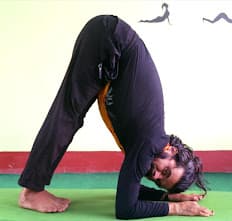
For Fluid Pyramid, take your right leg forward, toes to the front of the mat, and your left leg back with your left foot turned slightly out, squaring your hips. Inhale to lengthen your spine, exhale to pull your belly in and fold over the front leg. Place two blocks under your hands and add fluid movement like a gentle sway side to side, undulating your upper body, deeply bending and then straightening your knees.
In Goddess pose, from standing, take your feet wider than your shoulders, toes pointing outward. Inhale to get tall, exhale and bend your knees deeply. You can cactus your arms or place your hands on your thighs for support. Add a gentle rock side to side, or dip one shoulder for a twist toward the opposite knee, then switch sides, moving with your breath.
Leg Shakes & Kicks can be done standing or lying down. If standing, shake one leg then the other, stomp your feet, and kick your legs. If lying down, lift both legs and shake, kick back and forth or kick your bum, allowing for a playful release of tension in your nervous system.
Somatic Shaking (Trauma Release Shake) involves standing with feet hip-width apart and gently starting to shake your entire body, beginning from your feet and moving upwards. Allow your knees to soften and your body to move freely, releasing stored stress and anxiety.
For Fluid Forward Fold, in a traditional standing forward fold, make slow, deliberate movements. Gently sway your upper body or hips, add undulations, slowly roll up one vertebra at a time, then open your chest to roll back down, focusing on articulation of the spine.
In Sufi Grind, from a comfortable seat, place your hands on your knees or shins. As you inhale, circle your torso forward, going at your own pace and direction. As you exhale, your torso circles around and back. Do this for several rounds, moving with your breath, switching directions.
Diaphragmatic Breathing involves sitting comfortably, placing one hand on your belly and one on your chest. Take a deep breath in through your nose, bringing awareness to your belly, feeling it relax and expand. Exhale slowly as your belly pulls back in towards your spine, trying not to move your chest too much.
For Constructive Rest, lie on your back as comfortably as possible, perhaps with a bolster under your knees or the soles of your feet to the mat with knees falling in. Breathe deeply and let your body relax into the ground. Check in with different body parts, noticing tension, space, and relaxation as part of a body scan meditation.
Legs Up The Wall involves lying on your back, facing a wall. Bring your feet up on the wall and scoot your bottom closer to the wall. Extend your legs up the wall. Let them fall open or use a strap. Place a cushion under your seat if comfortable. Come out slowly and take a few breaths in rest before sitting up.
Three-Part Breath is performed lying on your back with a blanket under your head, knees bent, feet mat-width apart, and knees touching. Place one hand on your belly, the other on your heart. Notice body parts touching the ground. Breathe into your belly, expanding it, and fully releasing on exhale (5 times). Bring deeper breaths into your belly and ribcage, allowing your ribs to expand, emptying your lungs on exhale (5 times). Breathe deeply from your belly, through your ribs, into your top hand, expanding your heart and chest. Release breath slowly from your chest to your belly (5 times), then return to regular breathing.
For Articulation of the Spine, lie on your back with knees bent, feet hip-width apart, heels close to glutes (fingertips can touch). Hands behind your head, elbows wide. Lift your head and shoulders off the ground, wrapping your elbows forward. Move back and forth, exploring lifting and releasing each vertebra. Optionally, move left and right. Lift your hips into bridge pose, then slowly lower. As your hips lower, lift your head and shoulders like a crunch, rounding your spine. When your head releases, spread your elbows wide and lift your hips into bridge. Repeat 5-10 times, imagining individual vertebra movement to enhance body awareness.
In Supine Windshield-Wipers, lie down with arms relaxed out to sides. Bend your knees and step your feet wider than hip-width apart. Focus on one leg: bring your right knee toward the center of the mat, then gently lower. Repeat with your left leg (5 times each). Alternate legs: right knee to center while left knee extends out, then switch (10-15 times). Allow movement to be slow and controlled, observing the shift from side to side.
Human X involves lying down with legs extended mat-width apart, arms above your head spread to the edges of the mat, forming an “X”. Stretch your right leg away, then relax (5 times). Stretch your left arm away, then relax (5 times). Stretch your left leg away, then relax (5 times). Stretch your right arm away, then relax (5 times). Alternate by stretching your right leg and left arm away, then relax. Then stretch your left leg and right arm away, then relax (10 times), focusing on the physical sensations.
For Seated Neck Rolls, sit cross-legged, with a blanket under your seat if needed, maintaining a long spine. Place your hands behind your head, elbows forward around your ears. Gently press your head into your hands to relax your shoulders and neck. Slowly lift your elbows toward the ceiling. Move clockwise: point your elbows right, down, left, up (5 times). Repeat counterclockwise (5 times). Rest your arms, take a gentle twist right then left, enhancing body awareness in your neck and upper body.
Full Body Scan involves lying on your back on a mat. Extend your legs, arms rest at your sides. Snuggle your shoulder blades down. Soften your gaze or close your eyes. Gently scan your body for points of connection, from your feet to your head. Observe lifted body parts. Sense your body weight. Sense breath moving without changing the pattern. Scan for tension, send breath to tense areas. Rest for 10-20 minutes, promoting deep relaxation.
Moving Bridge is performed by lying on your back, knees bent, feet hip-distance apart, soles on the ground. Arms rest at your sides, palms up or down. Gently rock your pelvis forward and back. Rock your pelvis forward to connect your lower back to the earth. Root through your feet and arms, slowly lift your pelvis, lower back, mid-back. Observe active muscles. Slowly lower your back, one vertebra at a time. Once your tailbone meets the ground, relax activated muscles. Repeat, synchronizing breath (inhale lift, exhale lower), focusing on the articulation of the spine.
For Knee Rock with Cactus Arms, lie on your back, knees bent, soles of your feet on the mat, feet wider than shoulder-width. Extend your arms left to right, bend your elbows to find cactus arms. Soften your gaze or close your eyes. Slowly rock your knees to one side. Move your knees through the center, then lower to the other side. Continue at your own pace and rhythm, moving with breath. Observe weight shift across your pelvis, movement in your hips, pelvis, and spine. Option to gently roll your head from side to side, with or opposite to your knees.
Half Wind Removing Pose involves lying on your back, soles of your feet on the mat, arms rest at sides. Draw your right knee toward your chest. Interlace fingers around your right shin. Stay here or extend your left leg long. Observe compression in your right hip flexor, opening across your left. Direct breath toward your belly. Option to press your right shin into your hands and your hands press back. Option to hover your left leg off the ground, sensing your core. Option to lift your head and shoulders, bringing your nose toward your right knee, feeling your upper abdominals. Lower shoulders, head, left leg. Release right shin, right foot to ground. Bend left knee so both feet on ground, arms at sides. Rest, then repeat on the other side.
For Seated Torso Circles, sit cross-legged. Sit on a folded blanket/towel if desired. Place your hands on your thighs or knees. Soften your focus or close your eyes. Draw slow circles with your torso. As you come forward, reach your tailbone back, lift your chest and chin. As you continue the circle, round through your spine, draw your belly button back, lower your chin toward your chest. Continue at your own pace, range, breathing. Observe weight shift across your pelvis, movement in your spine. Reverse direction. Explore stillness when complete.
Seated Side Body Stretch begins from a cross-legged seat. Sit on a folded blanket/towel if desired. Place your left hand on your right thigh or knee. Slowly reach your right hand toward the sky, then to your left side for a gentle side body stretch. Breathe into your right side body. Come in and out of the stretch, or explore stillness. Look forward, up, or down. Use breath to soften tension. Observe spaciousness on your right, compression on your left. Return to center, release. Repeat on the other side.
In Sphinx Pose and Half Frog, lie on your belly. Extend your legs, tops of your feet on the earth. Elbows under your shoulders, lift your chest. Gently tuck your chin, gaze toward the top of the mat. Gently press your forearms down and back to open your chest. Direct breath toward your belly. Option to bend your right knee, opening your right leg to the side. Play with leg placement for comfort. Stay in stillness or curl your left toes under to gently rock your entire body forward and back. Allow breath to flow to tense areas. Explore stillness. Untuck your left toes, connect to your core, slowly bring your right leg back in. Rest in Sphinx Pose. Repeat on the other side.
Extended Child’s Pose with Pandiculation begins on all fours. Place a folded blanket or pillow under your knees. Big toes touch, knees hip-distance apart or wider. Press your hips back toward your heels. Fold forward, release your chest toward the earth, forehead rests on the ground or prop. Close your eyes or soften your gaze. Observe breath, send it up and down your spinal chain. Stretch your body like a dog or cat after a nap: spread fingers, grip mat, reach through arms, rotate shoulders, yawn. Move your body in a way that feels good. Relax your upper body, sense the stretch.
For Gentle Neck Circles, find a comfortable seat. Soften your focus or close your eyes. Imagine a pencil crayon attached to the crown of your head drawing small circles on the ceiling. Move your head in a small circle. Soften your jaw, eyes, face. Sense movement in your cervical spine. Keep circles small or explore larger. Reverse the circle, starting large, progressing to small. Explore stillness.
Finally, for Self-hugging, find a comfortable seat. Gently wrap your arms around yourself, giving a hug. Gently squeeze on a breath in, soften on a breath out. Explore a gentle sway side to side. Round through your spine, bow your head for an inward focus. Soften your gaze or close your eyes. Move in a way that feels good. Send breath toward your upper body, especially between your shoulder blades and spine. Soften your jaw and facial muscles. Sense hand temperature. Observe what surfaces. Explore stillness, release hands to lap.
Common Mistakes to Avoid
When practicing somatic yoga, it's crucial to prioritize safety and listen to your body, especially if you're a beginner. If you have knee, heart, or lung issues, it's wise to consider skipping poses like Child's Pose or consulting with your healthcare provider or a qualified yoga teacher. Pregnant individuals may need to widen their knees in Child's Pose to accommodate their baby bump safely. During Seated Windshield Wiper Pose, if you experience any pain in your hip or knee, stop immediately, as this pose may not be suitable if you have had a recent hip injury or surgery. For Cat-Cow Pose, if getting onto all fours is uncomfortable or unsafe, it can be easily adapted and practiced in a chair, demonstrating the flexibility of somatic principles. In any somatic yoga practice, the focus should always be on your thoughts, feelings, and breathing, not on achieving a perfect yoga pose. Yoga instructors in somatic yoga should foster a non-judgmental environment regarding your movements, as long as they are performed safely. If you experience any discomfort or pain during somatic exercises, adjust your range of motion. If pain persists, always stop the somatic exercise and instead focus on your breath, embodying the core principles of somatic therapy.
Somatic Yoga Exercises for Wellness
Simple Somatic Exercises for Beginners
For beginners, several simple somatic yoga exercises can be incredibly beneficial for enhancing body awareness and fostering relaxation. The Pelvic Tilt is a gentle somatic movement that helps increase awareness of the lower back and hips, easing tension and improving mobility. Another accessible somatic exercise is Constructive Rest, which can quickly trigger your relaxation response, connect you to your body, and help regulate hormones by allowing you to lie on your back and deeply relax. Gentle Neck Circles are a valuable somatic exercise that helps you sense movement throughout your cervical spine. Finally, the Self-Hug somatic exercise invites you to observe the comforting physical sensations of giving yourself a hug, promoting an inward focus and self-compassion.
Integrating Breath with Movement
Integrating breath with somatic movement is fundamental to a deep somatic yoga practice. As you perform somatic yoga exercises, ask yourself where your energy is and how it is flowing through your body. If something feels tense or tight, try using your mind and breath to release tension in that area, enhancing your body awareness. In Moving Bridge, you can synchronize your breath with the movement, breathing in as you lift your lower back and breathing out as you lower, focusing on the articulation of your spine. Similarly, in Knee Rock with Cactus Arms, you continue this knee rock at your own pace and rhythm, moving with your breath, observing the shifts from side to side. Diaphragmatic breathing is a deep breathing exercise that helps ground you, promoting relaxation and self-awareness by bringing your awareness to your belly. When doing the Three-Part Breath, you allow your exhale to fully empty your lungs and relax your entire body, connecting your mind and body.
Creating a Personal Somatic Yoga Routine
Creating a personal somatic yoga routine empowers you to truly tailor your practice to your individual needs and preferences. Any yoga pose or sequence can be somatic if you approach it with the right mindset, focusing on inner sensation rather than external form. Somatic yoga exercises are your bridge to full intuitive movement, meaning you personalize traditional yoga postures to what feels most nourishing for your body. The biggest thing to remember when you practice somatic yoga is to trust your own body and listen to its subtle cues; it is mainly about doing what feels pleasurable to you. Somatic practices are amazing because you can seamlessly integrate their principles and tools into your everyday life, allowing for continuous cultivation of body awareness and self-tuning. This approach allows you to trust your instincts without passing judgment, fostering a deeper connection to yourself.
Working with a Yoga Teacher
Choosing the Right Yoga Teacher
Choosing the right yoga teacher is paramount for a fulfilling somatic yoga practice. If you want to practice in a group or studio setting, look for a class where the instructor is most focused on your thoughts, feelings, and breathing, emphasizing inward experience over outward display. There shouldn’t be a lot of judgment of your movements and yoga pose executions, as long as you’re performing them safely and mindfully. If trauma recovery is a goal for your yoga practice, be sure to work with yoga instructors who specialize in trauma-informed yoga, ensuring a safe and supportive environment for emotional release and healing. While traditional yoga is rooted in Southeast Asian religions and culture, it's important to find a teacher whose approach retains these spiritual and somatic elements, rather than solely focusing on physical postures.
What to Expect in a Somatic Yoga Class
In a somatic yoga class, the focus is distinctly on the sensation and experience of movement, not on striking perfect poses, embodying the core somatic principles. Yoga instructors often begin by putting students in savasana to guide them through a body scan meditation, bringing awareness to various physical sensations and areas of tension throughout the body, from the crown of your head to the soles of your feet. Somatic movement should be practiced slowly and with control to facilitate awareness of our body’s responses to movement and breath. While the techniques can vary widely, the central themes remain the same: awareness, observation, and self-tuning. You might engage in activating and releasing muscle tension, exploring new movement patterns, and discovering fresh ranges of motion all while focusing on your breath and physical sensations to enhance body awareness and nervous system regulation.
Continuing Your Somatic Yoga Journey
To continue your somatic yoga journey and deepen your understanding, there are various pathways to explore. If you're interested in practical kriya yoga as a way to improve your daily life and relationships, you can check out a Yoga for Self Mastery course that often incorporates somatic elements. If you're a yoga teacher and want to take it a step further, you can learn about somatic coaching and somatic training programs to share the profound benefits of this movement practice with your students. Alternatively, you can explore somatic therapy with a licensed somatic therapist, who can provide personalized guidance to meet your goals, especially for addressing chronic pain or past trauma. For a comprehensive immersion, you can also take a deep dive into embodiment and somatic yoga with a Somatic Yoga certification program, further enriching your personal practice and professional capabilities.
For more information related to yoga therapy and various yoga packages you can contact Atma Gyan Wild Yoga.